Bench design
Sauna bench finish: wax, oil, or leave the wood untreated?
Sauna paraffin oil, sauna wax, or bare wood? What to put on a sauna bench, what to never use, and how to apply and re-oil skin-contact surfaces.
Suoraan asiaan (straight to it)
Bottom line: Leave a sauna bench bare or treat it with purpose-made sauna paraffin oil. Never use varnish, lacquer, or polyurethane on any skin-contact surface. Oil eases cleaning and resists sweat stains, but it does not seal the wood.
Key facts:
- Film finishes (varnish, lacquer, polyurethane) off-gas, blister, and get hot: never on benches
- Sauna paraffin oil is food-grade, colorless, and soaks in without a sticky film
- Apply thin coats to dry wood, focus on end grain, cure 24–48 hours before use
- Re-oil once or twice a year, or when poured water absorbs instead of beading
- Oil and wax do the same job on benches: pick one, never layer both on one surface
A sauna bench needs almost nothing on its surface, and that surprises people who assume raw wood must be sealed to survive heat and water. The right answer for the boards a bather sits on is narrow: leave them bare, or use a purpose-made sauna paraffin oil. The finishes that work on a kitchen table or a deck are the ones that fail hardest here. So most of this decision is really about what not to reach for.
What you can never put on a sauna bench
Start with the hard line, because it decides everything else. Standard varnish, lacquer, and polyurethane must never go on a sauna bench or any surface skin touches. These are film-forming finishes: they cure into a plastic-like skin on top of the wood rather than soaking in. That skin is exactly what you do not want in a hot, humid room.
Three things go wrong. The film gets hot. A cured coating sitting on the surface heats faster than bare wood, so a glossy bench top can feel harsh against skin at 80 °C (176 °F). The film off-gases. Coatings meant for room-temperature furniture release fumes when heated, and a closed sauna has almost no fresh air to carry them away. Owners who have coated a bench by mistake report smells that ruin a session and, in the worst cases, coatings that never fully cure. The film also traps moisture. A sealed surface stops the wood breathing, so water pushes in at any nick or edge and the finish blisters and peels.
There is one narrow exception, and it is not the bench. Floor duckboards and threshold trim sit at the coolest, lowest part of the room, and they never press against bare skin. Down there, a tougher water-shedding treatment can make sense. On seating, backrests, and headrests, the rule holds without exception: no film finish, ever.
What a sauna finish is actually for
It helps to be clear about the job, because "finish" here does not mean "seal." A sauna bench finish is not waterproofing. Aspen, alder, basswood, and thermally modified woods already tolerate the heat-and-steam cycle unfinished, and a well-built bare bench can last for decades. What a finish buys you is easier cleaning and better stain resistance.
The real enemy of a bench surface is not water but sweat. Sweat carries salts and skin oils that soak into open wood grain and leave gray or yellow blotches that no amount of scrubbing fully lifts. Heat-treated woods are more porous than their untreated versions, so they drink up that grime faster. A thin oil treatment fills the outermost fibers just enough that sweat and spilled water bead and wipe off instead of sinking in.
So the choice is not "protected versus unprotected." It is "bare wood I sand more often" versus "lightly oiled wood I wipe clean." Both are legitimate. Bare benches are common in traditional Finnish saunas and hold up fine with a seat cover and regular light sanding. Oiling simply shifts the maintenance from sanding toward wiping.
One more myth is worth clearing. Oil does not make a bench slippery, and it does not glaze the wood. A properly wiped-back coat leaves the surface matte and grippy, feeling much like bare timber. If a bench turns slick or tacky, the cause is almost always too much oil left to sit rather than the oil itself.
Paraffin oil, sauna wax, or nothing
For skin-contact benches, the go-to product is sauna paraffin oil. This is not lamp paraffin and not motor oil. It is a colorless, food-grade, hypoallergenic oil made for exactly this use. It soaks into the fibers instead of building a film, so the wood still feels like wood, and it produces no harmful vapor at sauna temperatures. Harvia, Almost Heaven, and most sauna suppliers sell an oil that works on alder, aspen, thermo-aspen, thermo-spruce, and cedar alike. Manufacturers recommend treating new benches before first use rather than waiting for stains to appear.
Sauna wax is the other purpose-made option. It leaves a slightly more visible matte sheen and repels moisture a touch more aggressively. That is why many builders steer it toward wall and ceiling panels rather than the seating boards. On a bench it does the same core job as oil: resist sweat and ease cleaning. The one firm caution is not to combine them. Oil and wax fight each other on the same board, giving patchy absorption and an uneven look, so pick one product per surface and stay with it.
Leaving the wood untreated is the third real choice, not a failure to finish. A bare aspen or thermo-wood bench used with a pefletti (small seat cover used in shared saunas) and sanded lightly once a year stays clean and sound. Traditional Finnish saunas often ran bare benches for generations, and the wood aged to a soft silvery gray that many bathers prefer to any treated look. Choose bare wood if you like that raw finish and do not mind occasional sanding. Choose oil if you would rather wipe than sand. Oil also earns its keep when the sauna sees heavy or shared use. In that setting sweat staining builds fast, and a bare surface would need sanding more than once a year.
The finish call is the last one in a chain. It pairs with the wood species and hidden hardware you already picked for the frame. It also depends on the bench depth and tier heights, since those set how much surface area you actually have to treat and re-treat each year.
How to oil a sauna bench, step by step
Application is quick, but the sequence matters. Rushing the cure is the most common way people turn a good oil into a tacky, smelly surface.
- Sand the boards smooth, to around 180 grit, and vacuum off all dust. Oil sinks evenly only into clean, open grain.
- Make sure the wood is completely dry. Oiling damp wood traps moisture under the treatment and can lift it later. If you just cleaned the floor and benches, let everything dry fully first.
- Test on an offcut. Oil deepens the wood's tone, so confirm you like the color before committing to the whole bench.
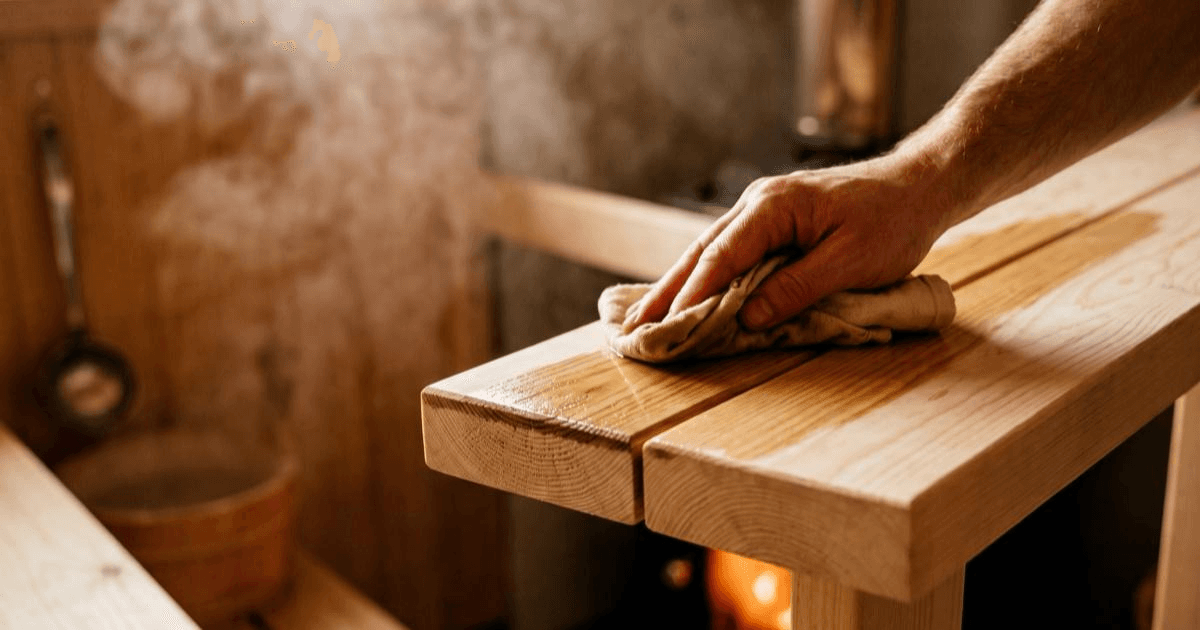
- Wipe on a thin, even coat with a lint-free cloth. Work the end grain of each board hardest, since board ends drink up the most water in use.
- Let it stand 30 to 60 minutes, then wipe off every trace of surplus oil. Thick coats never fully soak in; they stay tacky and attract dirt, which is the opposite of the goal.
- Cure it. Allow 24 to 48 hours of drying time first. Then run the empty sauna hot for 30 to 60 minutes, with the door cracked and a vent open, to clear any last odor before anyone bathes.
Re-oil once or twice a year, timed with a deep clean. The simplest re-oil test is water: flick a few drops onto the bench, and if they soak straight in instead of beading, the surface is due. Heavy-use or commercial benches may want three light coats a year. Between treatments, a seat cover and a quick dry-and-air after each session do more for the wood than any product on the shelf.
The practical takeaway is short. Skip every hardware-store film finish, treat skin-contact wood with sauna paraffin oil or leave it bare, keep coats thin, and cure before use. Do that, and the bench surface becomes the least demanding part of the whole room to own. The dimensions of the room around it are a separate call, worth getting right before the bench is even framed.
Sources
- Paraffin oil for benches 500 ml (SAC25060) — Harvia, 2026
- Choosing sauna benches: frequently asked questions — Harvia, 2026
- How to finish the wood in a sauna: interior and exterior treatment — Haven of Heat, 2025
- The best wood treatments to keep your sauna looking new — Finnish Sauna Builders, 2025
- Paraffin oil for sauna wood care — Almost Heaven Saunas